Foundations of Training Plans in Organizations

Foundations of Training Plans in Organizations
A complete guide to identifying training needs and turning them into practical programs that support organizational goals.

Identifying training needs and aligning them with corporate strategy for measurable impact
The training plan within organizations is an essential tool for developing employees and enhancing performance efficiency. It helps identify training needs and transform them into practical programs that support the achievement of organizational objectives. It also improves productivity and enhances work quality by linking training to strategic directions and market requirements.
Types of Planning
Strategic Planning
- At the top management level
- Can involve all organizational levels
- Long-term (result of medium and short-term plans)
- May encompass all planning types
Tactical Planning
- Translates general plans into broad and specific goals
- Distributes objectives among employees
- Monitors goal execution
- True benchmark for moving plans from paper to reality
Executive Planning
- Implements strategic planning
- Defines inputs and outputs
- Determines methods and tools
Operational Planning
- Converts defined goals into activities
- Translates activities into action plans
Where Does the Training Plan Fit?
Falls between Operational & Tactical Planning
3 to 12 months — defines strategic directions
Core Planning Questions
Vision & Mission
Vision (The Dream)
- A car in every garage (Ford)
- Tourism beyond Earth
- World leaders in training
Mission
Clarifies the core purpose of the organization, what products or services it offers, to whom, and with what value or style. The mission reflects the company’s identity and daily operations, helping guide decisions and achieve goals in a structured way.
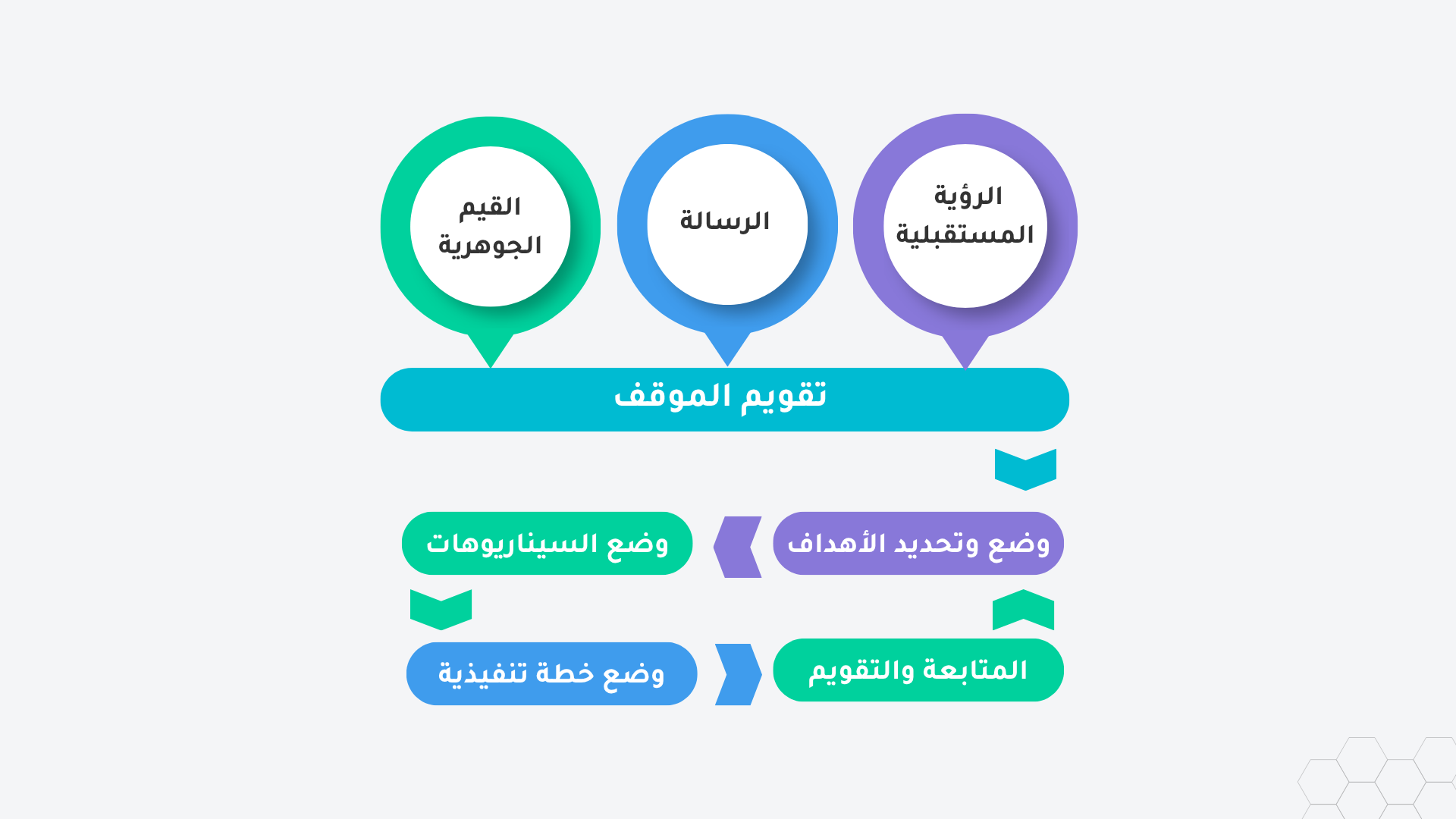
Core Values: Primary Training Source
Values embedded in all employees’ mindset; they are an integral part of the organization’s systems. Following them is mandatory, violating them leads to accountability. Each value forms a complete training program.
Situation Analysis (SWOT)
Relies on studying the current state of the organization, linking training to its needs, and analyzing available data to identify training priorities and formulate clear, actionable training objectives.
Sources of Training Objectives
- Vision
- Mission
- Operational plans
- Periodic reports
- Operational needs
- Committee recommendations
- Gaps (Strengths/Weaknesses & Opportunities/Threats)
- Market studies
- Customer needs
General vs. Specific Objectives
General Objectives
- Long-term
- Broad
- Non-measurable
- At top management level
Specific Objectives
- Short-term
- Specific
- Defined by measurable criteria
- Across all departments
SMART Objectives