1
Choose One TaskStart with an annoying routine task like task distribution.




Eliminate the routine and free your energy for creativity using automation and AI technologies.

AI-powered administrative automation simply means using smart software to perform routine and repetitive tasks on behalf of employees and managers.
Instead of your team spending hours entering data or following up on tasks, automated systems do this work
with high accuracy and speed.
Before diving into the details, it is important to understand that automation is not a single type,
but has different levels depending on the degree of intelligence in the system.
Based on real practical applications in finance, customer service, and shared services, these tasks consume significant time and are an ideal starting point for your AI-powered administrative automation journey.
| # | Task | Automation Solution |
|---|---|---|
| 1 | Task Planning | System distributes tasks by priority and skills |
| 2 | Shift Scheduling | System fills the schedule based on employee availability |
| 3 | Progress Tracking | Real-time dashboard showing task completion status |
| 4 | Data Management | Connect customer forms directly to CRM |
| 5 | Report Generation | Automated periodic reports issued automatically |
| 6 | Expense Management | Digital form with receipt upload and automatic calculation |
| 7 | Escalation Management | System tracks SLA and sends escalation alerts |
| 8 | Quality Control | Automated quality check of completed tasks |
| 9 | Resource Allocation | System distributes tasks based on employee competencies |
| 10 | Project Management | Central dashboard that communicates with other systems |
Start with an annoying routine task like task distribution.
Such as Jotform, Zapier, or Power Automate.
Run the automation for two weeks and monitor results.
Explain the benefits clearly and ask for their feedback.
Gradually add other processes based on results.
AI-powered administrative automation is not a replacement for humans, but a liberation for them from boring work. Studies confirm that organizations that invest in change management and employee motivation achieve results 45 times better than those that focus only on technology.

Remember: Technology does not take your job, it takes the boring part of it.
For more information: You can check out our article: Best AI Tools for Business Management
How do you become an influential and attractive personality? A practical guide to gaining confidence, presence, and influence over others.

Charisma is a skill that can be learned and developed!
Developing personal charisma is what distinguishes successful people from others. Have you ever encountered someone close to you who has ordinary qualifications, less than yours, yet at the same time possesses a strong, confident personality and a greater presence in society? This will inevitably make you wonder about the secret behind your friend’s success in quickly gaining clients’ trust, despite not having a good grasp of the secrets of the work, unlike other colleagues.
Charisma is an exceptional trait that gives its owner superiority over others in all fields, whether professional or emotional. It earns you a multiplied influence over others’ decisions that often exceeds even material influence. Here are the best effective steps for developing successful personal charisma.
You cannot give what you do not have. Therefore, you cannot influence others’ lives while being unable to manage your own life properly. Self-confidence makes you mentally prepared for any problems or troubles you may face, because you are simply not programmed to give up.
Charisma is an irresistible magic, especially when combined with mastering body language, which ensures prestige and a strong presence. Master the language of the eyes, especially the captivating, fleeting glance into others’ eyes. Avoid direct eye contact with strangers so it is not interpreted as aggressive behavior.
“Listen more than you talk,” because chattering is a trait of failures. Charisma is linked to the power of presence and its impact on the flow of conversation, so good listening is the first step to gaining the admiration of the person you are talking to.
Great people are by nature dreamers and adopt causes greater than themselves. Having a cause will program you with a clear vision that keeps you away from confusion and wandering, which affects most people at periods in their lives.
Strong charisma is always accompanied by calm nerves. A strong leader does not get tense or react recklessly when talking to others. They wait for their turn to speak with pacing and rhythm control, in order to corner the other party.
When you talk to others, you should be engaged with the finest details during the conversation. Your comment on one of them suggests to the listener that you are immersed in the conversation and giving it full attention. This will make the other party enjoy talking to you.
People usually do not tend to be attracted to a chatty personality or one that shares its details with everyone. The aura that mystery leaves in souls is stronger than boasting about achievements.
Scientifically, people read a smile as an invitation to approach, and that the environment is peaceful for creating friendly communication. Do not hesitate to spread smiles when encountering any situation, but do not overdo it so your behavior is not understood as provocation.
The ordinary person fears fateful decisions, so they tend to trust a leader who makes them on their behalf. A leader does not hesitate to make decisions while bearing responsibility regardless of the consequences. Your success in making the right decisions during crises will give you momentum.
A strong, charismatic leader does not reproach you for past mistakes but listens to you to help you draw lessons. To acquire the same attractive personality, avoid delving into people’s pasts with them, give them good space to express themselves, and shower them with support.
Read also: A Comprehensive Guide to Developing Effective Communication Skills
A comprehensive guide to identifying training needs and transforming them into practical programs that support achieving organizational goals.

A comprehensive guide to identifying training needs and transforming them into practical programs that support achieving organizational goals.
Preparing training plans in organizations is an essential tool for developing employees and raising performance efficiency. It helps identify training needs and transform them into practical programs that support achieving organizational goals. It also contributes to improving productivity and enhancing work quality by linking training to strategic directions and market requirements.
It falls between operational and tactical planning
From 3 months to 12 months – defining strategic directions
Clarifies the primary purpose of the company’s existence, what products or services it offers, to whom, and with what value or approach. The mission reflects the company’s identity and daily work, and helps guide its decisions and achieve its goals in an organized manner.
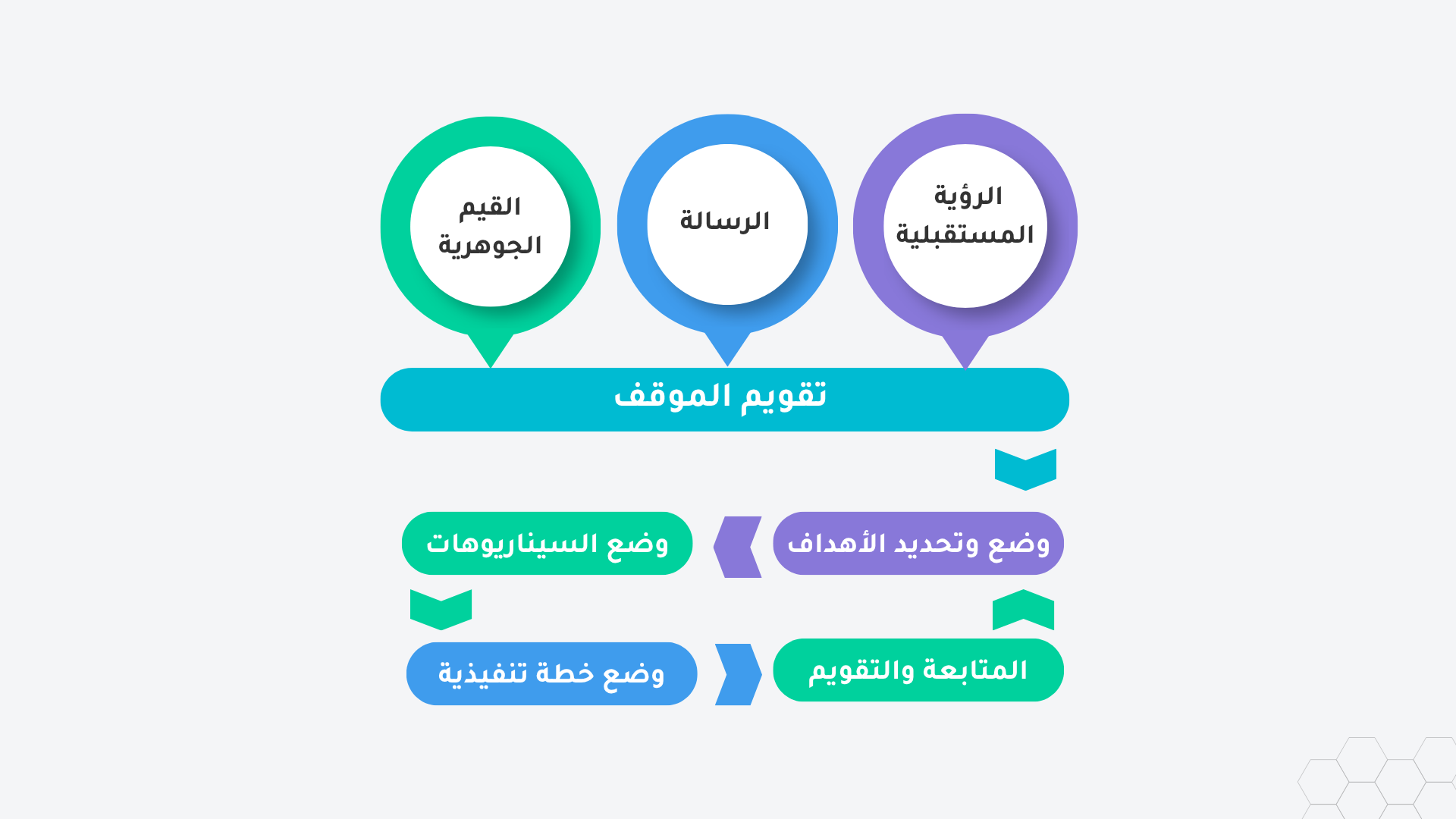
Values instilled in all employees, which are an integral part of the organization’s systems. Following them is mandatory, and violating them is subject to accountability. Each value constitutes a complete training program.
Relies on studying the current situation of the organization, linking training to its needs, and analyzing available data to determine training priorities and formulate clear, actionable training objectives.
Read also: A Comprehensive Guide to Training and Development Management

Strategic training and development management in employee training and professional development is crucial for achieving your organization’s goals. By nurturing employee talents and developing their skills, you not only strengthen your company culture but also empower leaders to better manage development needs.
Employee training and development refers to a company’s ongoing commitment to enhancing their skills and performance through a range of programs and activities. The U.S. Bureau of Labor Statistics reports that 84.4% of employees in companies with 50 or more employees receive some form of formal workplace training, serving multiple purposes, including:
By equipping employees with new skills, you not only open doors for career advancement but also ensure your teams are always ready to meet new challenges. This continuous learning process enables employees to deliver their best and contribute to the organization’s growth.
Focuses on enhancing the specific skills needed for an employee’s current job. These initiatives are typically more structured and short-term, such as company orientation programs, software training, and technical workshops.
Takes a broader, longer-term view aimed at preparing team members for future roles and their professional growth. This may include leadership programs, mentoring, and cross-training to broaden their skill sets.
Training and development work together to create a more flexible and future-oriented workforce.
A well-trained team contributes to improved performance, higher productivity, and stimulates innovation. Companies that implement effective training programs also see higher employee retention rates, as team members feel a greater sense of belonging and appreciation.
For your employees, the impact is equally important, as providing career growth and skill development opportunities enhances their sense of belonging and job satisfaction. By building a culture of continuous improvement, you can equip employees with the tools they need to reach their full potential.
Management ensures training initiatives align with company goals and are executed effectively. Training and development managers primarily oversee the planning, implementation, and evaluation of programs designed to enhance employee skills and performance. The goal is to create an environment where team members can thrive.
Gallup found that 70% of the variance in team engagement is influenced by leadership. This means managers have the ability to shape the direction of employee learning through the relationships they build.
Designing customized development programs that align with business goals, and collaborating with department heads to ensure content is engaging and actionable.
Overseeing the training budget and allocating funds, making smart decisions to scale initiatives while maintaining quality.
Delivering key training sessions, especially for core programs, and helping leaders communicate material clearly.
Fostering a culture of continuous learning and encouraging employees to grow, collaborate, and take ownership of their learning journey.
Ensuring all training programs comply with industry regulations and company standards, and keeping up with legal requirements.
Identify skill gaps by analyzing employee performance, gathering feedback, and aligning training with business goals.
Set measurable goals that provide direction and a way to track success, whether the focus is on leadership or technical skills.
Select methods that suit the content and employees, such as hands-on workshops, mentoring programs, or e-learning courses.
Create an environment that encourages employees to absorb and apply new skills, ensuring accessibility and participation.
Track progress, gather feedback, and analyze results to improve future programs and build a culture of continuous learning.
Combine in-person sessions, e-learning, and hands-on training to meet different learning styles.
Tailor training to employees’ roles and career goals to ensure relevance and engagement.
Connect employees with mentors to facilitate learning groups and promote knowledge sharing and skill development.
Create an environment where employees can share their views on training to continuously improve programs.
Track progress using analytics and feedback to refine training and ensure it remains effective.
Read also: Human Resources Development Strategies
A comprehensive guide that draws a clear roadmap for anyone taking on executive leadership responsibility: from defining roles and competencies, to building teams and creating influence.

The skills of a successful CEO are what set an outstanding leader apart from the rest. The CEO is the highest authority in the organization and the reference point from which everyone else’s authority flows. The CEO sets the organization’s policies, direction and strategic plans, makes decisions, solves problems, and carries out all four functions of management. Beyond that, the CEO is the face of the organization and the link between many different parties.
Also read: A Complete Guide to Developing Personal Charisma
The link that connects the board’s direction with its operational application on the ground.
Represents the organization before its clients and strategic partners, and strengthens its image in the market.
Planning, organizing, directing and controlling – practiced together in an integrated and balanced way.
The authority of every management level derives from the CEO’s authority, which makes the CEO the first point of reference for decisions.
From this leadership position, the CEO is responsible for achieving a set of interwoven strategic goals that together shape the organization’s identity and competitive strength.
Setting a clear vision and long-term plans for the organization.
Selecting talent, developing performance and continuously raising productivity.
Drafting the regulations and systems that govern how work runs inside the organization.
Redrawing organizational structures and improving processes for maximum efficiency.
Setting quality standards and developing the HR and service systems.
Improving the organization’s image among clients, partners and society.
If goals draw the big picture, daily duties are the fabric from which that picture is made on the ground. Among the most important things a CEO does every day:
| Duty | Description |
|---|---|
| Following up on goal execution | Continuously checking progress toward goals and overall performance |
| Keeping pace with change | Noticing shifts in the internal and external environment and adapting to them |
| Guidance and supervision | Directly overseeing the flow of work and steering teams toward goals |
| Chairing meetings | Running work sessions and making sure they end with effective decisions |
| Correspondence | Completing official correspondence and ensuring institutional communication |
| Meeting key clients | Building strategic relationships with decision-makers and influential clients |
| Solving daily problems | Intervening quickly and resolving operational obstacles that block the work |
| Reviewing periodic reports | Analyzing performance indicators and making appropriate decisions based on them |
A competency is not merely a skill that is practiced; it is an integrated mix of knowledge, behavior and the ability to perform under different circumstances. Here are the main competencies a successful CEO needs:
Influence is not just one more competency; it is the central competency with which all the others intersect. A leader who lacks the ability to influence finds himself facing a pile of papers and powers with no spirit to set them in motion.
Executive reality does not always look like what plans and theories portray. A CEO often faces deep-rooted challenges that call for patience, intelligence and strong will to overcome.
Legacy mindset: Inherited working methods and mentalities that are deeply entrenched and resist change.
A sterile structure: Rigid organizational structures that do not serve the goals of the current stage.
A frustrated or divided team: Cliques and internal conflicts that drain energy.
A negative public image: A negative legacy of the organization in the minds of clients and the public.
A restrictive HR system: Outdated policies that make it impossible to attract the right talent.
Decision bureaucracy: Long decision cycles that slow the response to change.
Complicated procedures: Sprawling systems and processes that burden employees and clients alike.
The answer starts with an honest diagnosis of reality before setting out to change. Whoever knows exactly where he stands can draw the way out clearly.
In day-to-day practice, the CEO embodies five overlapping roles, none of which can be complete in isolation from the others. A CEO who masters all of them is a complete leader; one who neglects even one of them will be felt by the people who work with him before he feels it himself.
In all its paths, the CEO’s role rests on three core axes: influence – which inspires the team and creates commitment; decision making – which governs the organization’s course at moments of choice; and problem solving – which embodies the ability to turn obstacles into opportunities.
“If three people set out on a journey, let them appoint one of them as their leader.”
— Narrated by Abu Dawud from Abu Sa’id al-Khudri, may God be pleased with him
Leadership has never been an organizational luxury; it is a human necessity that Islam recognized long before modern management theories discovered it. Leadership is defined as moving people toward a goal, and it requires three indispensable elements:
In Arabic, each of the seven begins with the letter “Ra”:
An outstanding leader can see the world from three heights at once, and this ability to move between levels is what distinguishes a true leader from a conventional manager.
The management scholar Douglas McGregor put forward his famous theory to classify managerial attitudes toward employees. It is an important starting point for every CEO who wants to understand his own style in dealing with his team.
The effect of your theory on your leadership behavior is greater than you imagine. A leader who believes in Theory X creates a discouraging, controlling environment, while a leader who believes in Theory Y builds a culture of empowerment and responsibility.
There are unwritten laws that leaders discover through long experience and practice. Here are the most notable:
If the leader is sound, the organization is sound; if the leader is corrupt, corruption becomes widespread. When you notice any decline in an organization’s condition, look at the leader first.
You become a role model, and those close to you try to imitate your conduct, words and actions. True influence is not measured by position, but by what remains of your impact in the hearts of those you led.
Between emotion and logic — between mercy and justice — between work and life — between reward and punishment — between firmness and gentleness — between friendship and position.
Before admitting anyone into your close circle, ask: Do they fit with the team? Do they have the required competence? Do they add real value?
Learning — gaining knowledge and experience.
Earning — achieving results.
Returning — giving back to society and the organization.
Family — religious — financial — educational — social — psychological — professional — health. Balancing these areas is the key to sustaining leadership performance.
A shared purpose and goal
Real empowerment
Building relationships
Flexibility in dealing with others
Optimal performance
Appreciation and recognition
High morale
If the leadership dimension draws the spirit, the management dimension builds the body. It includes a system of tools and models that turn strategic direction into an operational reality that can be executed and measured.
The CEO’s scope of work covers every level of the management pyramid:
The clock and the compass are the CEO’s two basic tools: the first determines the time available, the second the right direction. Before drawing up plans, an accurate diagnosis of the situation is essential through SWOT analysis:
Before formulating goals, you must know where they come from. No real goal is born out of nothing; goals are drawn from:
A SMART goal is not just a wish or a hope; it is a condition that makes every goal executable, measurable and trackable. The more closely a goal follows the SMART criteria, the higher its chances of being achieved.
A distinction must also be made between two types of goals: general goals, which are long-term, not quantitatively defined and relate to senior management; and specific goals, which are short-term, measurable by clear criteria and cover all levels of management.
A successful CEO is not content with a single scenario. Developing several scenarios gives him wider room for choice when surprises happen, and makes decisions about adapting to change faster and more confident.
Reengineering (Business Process Reengineering) is not merely cutting staff; it is a radical journey toward eliminating old methods and using resources in newer, more productive ways. It rests on three main axes:
One of the most common mistakes among CEOs is the belief that delegating tasks means giving up authority. In reality, smart delegation is the most powerful tool for scaling leadership.
The Pareto principle (80/20) helps in understanding how leadership effort is distributed, showing that focusing on what makes the greatest impact is the essence of executive efficiency.
Keep 20% of the tasks for yourself
Of activities can be delegated and confidently assigned to the team
When the delegate fails to perform the task and it returns to the manager as a problem that consumes more time than it would have taken to do it himself. There are three reasons: choosing the wrong person, failing to truly empower them with authority, or personal reasons that hinder performance.
As much as delegation is recommended, there are tasks the CEO must keep and should not give up easily:
A service strategy is not just a brochure or a slogan hanging on the office wall; it is an integrated, distinctive way of delivering service that brings high value to the client and strengthens the organization’s image. If you do not have a service strategy, hurry and get one.
Advertisements, promises and slogans all form an implicit price the organization sets for the client, and raise the ceiling of his expectations. If reality falls short of what you promised, the result is a double loss: losing the client and losing trust.
The elements of outstanding service come together in a harmonious symphony that is incomplete without any one of its strings:
Not all clients are equally important strategically, and understanding this distinction determines how effort and resources are allocated:
It is not enough for a successful CEO to manage from behind a desk; the field is where the most precise and sound decisions are born. Ways of going down to the field include:
Some behaviors are not tolerated in an outstanding service environment, because they destroy in a moment what took years to build:
The making of a successful CEO is incomplete without a firm human dimension. After all, management is the art of dealing with people, and every tool, system and decision passes through a human being who carries feelings, expectations and dignity.
Etiquette is dealing with people tactfully and behaving respectfully toward everyone – clients, colleagues, partners, subordinates and superiors. Protocol, on the other hand, is the diplomatic system that governs the manners of relations and negotiation in formal settings.
Looking the other person in the eye shows respect and self-confidence. The Prophet, peace be upon him, would not turn his gaze away until the other person was the first to lower his eyes.
“So by mercy from God, you were gentle with them. And if you had been rude and harsh-hearted, they would have dispersed from around you.” – Gentleness is not weakness; it is true leadership strength.
“O God, whoever takes charge of any matter of my nation and is harsh with them, be harsh with him; and whoever takes charge of any matter of my nation and is kind to them, be kind to him.” – Kindness in management is an acquired mercy.
“The first step of affection is a cheerful face, the second is warmth, and the third is fulfilling people’s needs.” – A smiling face is the first degree of true service.
“O you who have believed, fulfill your contracts.”
— Surat al-Ma’idah, verse 1
“Indeed, God loves that when one of you does a job, he perfects it.”
— A noble hadith on excellence and quality
“The master of a people is their servant on a journey.”
— Narrated by al-Tabarani and others, on the virtue of serving others
Human error is not one uniform block, and fairness requires us to distinguish its types before passing judgment:
The deliberate mistake: Intentionally breaking a rule with full awareness of it.
The negligent mistake: Carelessness and laziness that led to the error.
The diligent mistake: Someone who gave their best effort but misjudged – excusable.
The compelled mistake: Fell into error under the pressure of necessity.
The wronged person’s mistake: Forced into the error by coercion.
The mistake of ignorance: Committed the violation without knowing about it at all.
To conclude this human dimension, here are golden rules that form the CEO’s conscience and moral compass in every situation:
The successful CEO is not the one who holds the most authority, but the one who best uses it in service of the organization and the people in it. He is the leader who thinks strategically, works systematically, deals humanely, inspires through his influence, and builds with his patience. These fourteen competencies, these laws, and these five dimensions are not a ready-made recipe, but mirrors that help you see yourself clearly, and then develop yourself with determination.